Property Search
How Large Should Your Inland Empire Home Search Area Be?
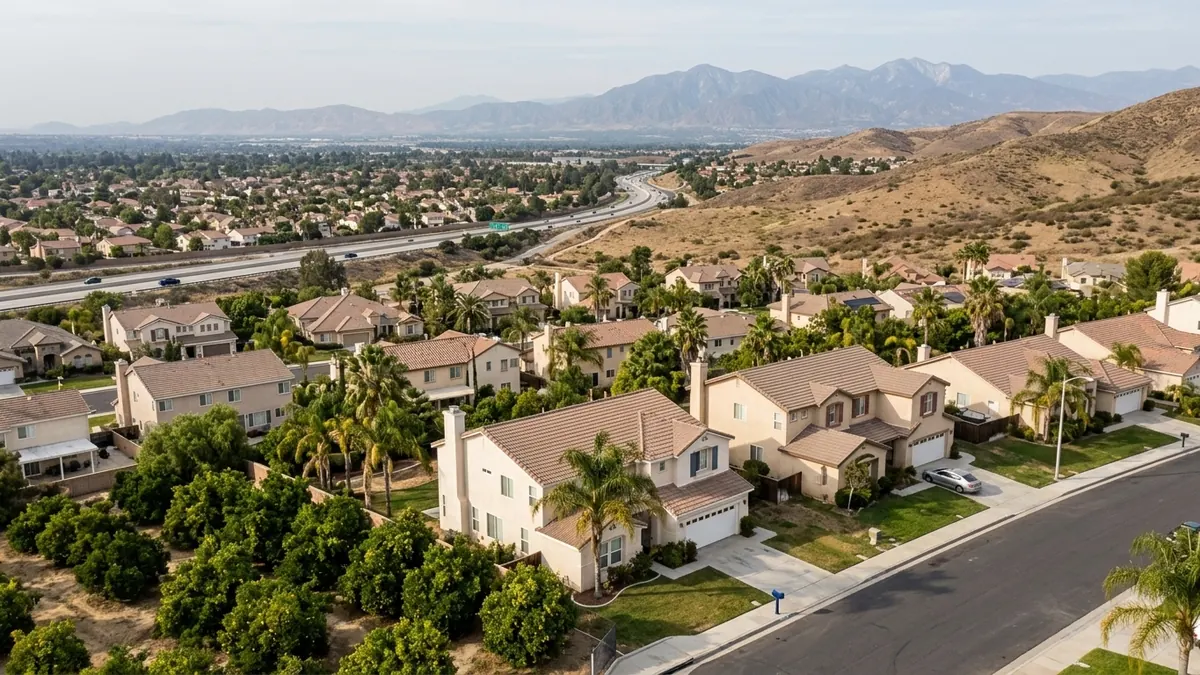
Your search area should be as large as your priorities require and no larger. Start from your commute pattern, property type, budget and must-haves, draw a first boundary from those, and revisit it once real showings tell you whether it fits.
On this page
Start With Priorities, Not a City Name
Your search area should be exactly as large as your priorities demand, and no larger. Most buyers in the Inland Empire start the other way around: they pick a city they have heard of, type it into a search portal, and then try to fit their life into whatever appears. A better first move is to write down how you actually live, then let those facts draw the boundary for you. The city name comes last, not first.
The question matters here more than in most regions because the Inland Empire is not one kind of place. Across the region and the communities around it you can find newer suburban tract homes, established neighborhoods with older housing stock, condos and townhomes, mountain cabins around Lake Arrowhead and Crestline, high-desert property near Morongo Valley, and vacant land. A boundary drawn by city name alone will either include property types you would never buy or exclude ones you would.
There is also a practical cost to getting the size wrong in either direction, and the two mistakes look different from the inside. Too narrow, and you quietly miss homes that would have worked because they sat a few streets past a line you drew without much thought. Too wide, and you spend weekends touring properties that were never really comparable to each other, which makes every decision harder than it needs to be. The rest of this article walks through how to draw a first boundary that fits, and how to know when it needs to change.
The Four Inputs That Draw the Boundary
Four inputs do most of the work of sizing a search area, and they are worth settling before you open a listing portal. Each one either pulls the boundary in or pushes it out, and together they describe a shape that rarely matches a single city limit. Take them in order, write down your honest answer to each, and notice where you are guessing rather than deciding. A guess is fine for now, as long as you label it as one and plan to confirm it.
- Commute pattern: where each household member drives, how often, and at what time of day
- Property type: a detached house, a condo or townhome, a mountain cabin, or vacant land
- Budget: the monthly payment you are comfortable with, not just the price a lender might approve
- Must-haves: the two or three features you would walk away from a home without
What Happens When the Boundary Is Wrong
A search area that is the wrong size fails quietly. You rarely get a clear signal, just a slow drift toward frustration and a growing sense that nothing on the market fits. Watch for these symptoms, because each one points to a specific correction rather than a general complaint about the market. Some indicate a boundary drawn too tight, and others indicate one drawn so loose that it stopped meaning anything.
- Too narrow: only a handful of listings match, and most of them have been sitting unchanged for weeks
- Too narrow: you keep losing out on the same few homes that every other buyer also wants
- Too narrow: you start bending your must-haves to make a marginal home fit
- Too wide: showings jump between property types that have nothing in common but a price
- Too wide: you cannot explain why a listing is on the list, other than that it appeared
How to Draw the First Boundary
Start with the commute, because it is the least negotiable of the four inputs and the easiest to test. Pick the two or three places you drive to most, at the actual time you drive there, and work outward from each until the trip becomes something you would not accept twice a day. Where those zones overlap is the raw material for your first boundary. It will look like a blob on the map rather than a city, and that is fine.
Next, lay property type over that shape. If you want a detached house with a yard, some parts of the blob will be dense with condos and townhomes and can be shaded out. If you are open to a condo, the opposite happens and the boundary effectively grows without moving. Vacant land pulls the boundary in a different direction entirely, often toward the mountain and high-desert communities, and brings its own list of things to verify with the county, a surveyor and the utility providers before you treat any parcel as a serious option.
Budget comes third, and this is where the real estate and financing sides of a search meet. Your comfortable monthly payment, confirmed in a pre-approval conversation with a lender, tells you which price range is realistic, and that range tells you which parts of the boundary contain homes you could actually buy. Lindsey Shortland works as both a REALTOR® and a Loan Officer, so he can walk through how those two conversations connect, whether or not you end up arranging financing through him. Once budget is layered on, the must-haves do the final trimming.
Revisit the Boundary After Real Showings
The first boundary is a hypothesis, not a commitment. After five or six showings inside it, sit down and ask what the visits actually taught you about your own priorities. If every home that felt right sat near one edge, the boundary probably wants to shift in that direction, and it is worth asking what is just past that edge. If the homes that felt wrong shared a trait you had not listed, you have discovered a must-have that belongs in your written priorities.
Revisit it on a schedule too, not only when something feels off. Inventory changes through the year, your price range can change after a financing conversation with your lender, and a job move can rewrite the commute overnight. A boundary that made sense in the spring may need redrawing by the fall, and there is nothing wrong with that. The point is not to get it right once but to keep it honest as the facts change.
Draw the boundary around how you live, not around a city name. Then let the showings tell you whether you drew it right.
Common Mistakes When Sizing a Search
The most common mistake is letting a portal define the area for you. Search tools default to city names and zip codes because those are easy to index, not because they match how anyone commutes or lives. A boundary that happens to stop at the Corona city line will exclude homes just across it in Norco or Eastvale that might have matched your list, and include homes on the far side of Corona that never will. The line on the map should follow your priorities, not the other way around.
The second mistake is sizing the area by what you hope to afford rather than what you have confirmed. Buyers who skip the pre-approval conversation tend to draw generous boundaries, tour homes at the top of them, and then discover that the realistic price range points somewhere else entirely, sometimes to a different property type as well. Confirming the number first is less exciting than touring, but it saves you from falling for a house you cannot buy and from redrawing the whole map afterward.
What to Write Down Before Searching
Before anyone sets up a saved search for you, put a single page together. List the two or three destinations that anchor your commute and the times you travel to them. Name the property types you would consider and the ones you would not, then write the monthly payment you are comfortable with and note whether a lender has confirmed it yet. Then list your must-haves, and be strict about the word must.
That page is what a first conversation with Lindsey is built on. It lets him ask more useful questions than a portal can, such as whether the commute you described is really daily, or whether the yard on your must-have list is about a dog, a garden or space for guests. Those answers change the shape of the boundary more than any city name does, and they are the difference between a search that feels organized and one that feels endless.
If you are somewhere in the middle of this, with a rough idea of where you want to be and no clear boundary yet, that is a normal place to start. Bring the page, or bring the half-finished version of it, and do not worry about whether the answers are final. Tell Lindsey what you are trying to figure out, and the two of you can narrow it down from there.
This article is general information about real estate decisions across the Inland Empire. It is not legal, tax, insurance, lending or financial advice. Active listing prices, inventory and market conditions change and should be confirmed at the time of a decision. Confirm current details with Lindsey Shortland or the appropriate licensed professional.

Written by