Home Sellers
Is Selling Vacant Land Different From Selling a House?
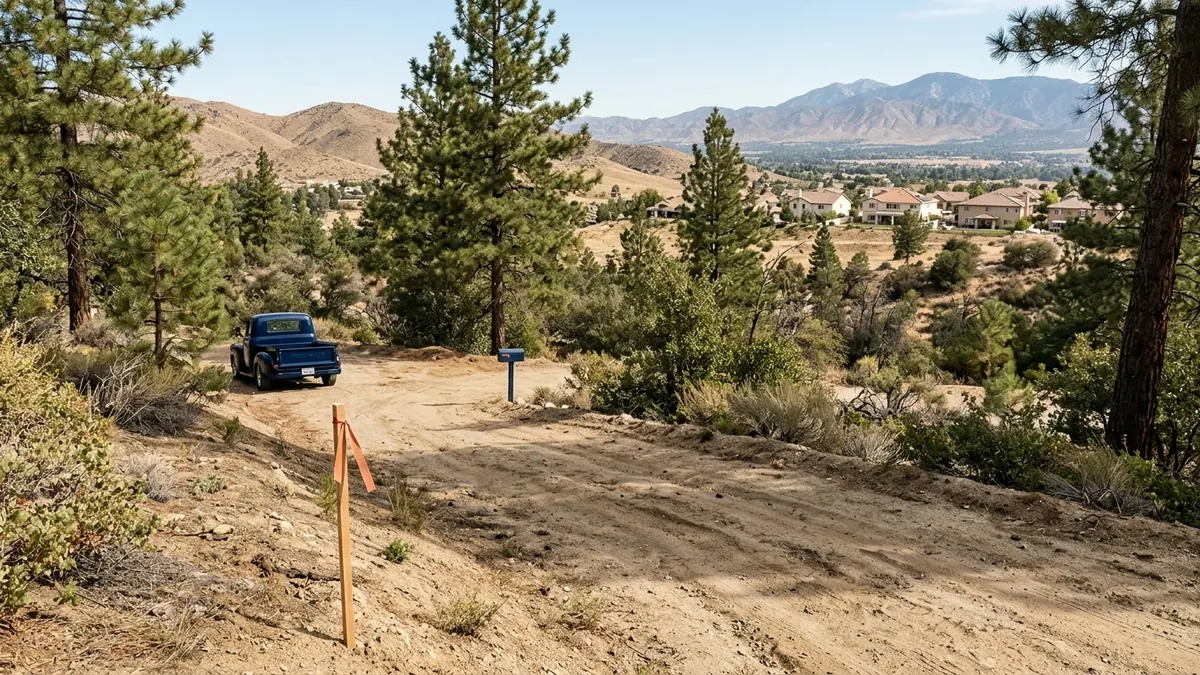
Yes: land draws a smaller, more specialized buyer pool, is often financed differently, gets priced with fewer direct comparables, and sells on verified answers about access, boundaries, utilities and zoning rather than on staging. Expect a longer, more question-driven process.
On this page
Yes, and the Differences Start With the Buyer
Yes, selling vacant land is different from selling a house, and the differences run through the whole process. The buyer pool is smaller and more specialized, financing works differently, and there is nothing to stage, so the listing sells on documentation instead of photographs of a kitchen. Comparable sales are scarcer, so pricing takes more judgment, and the timeline is usually longer because every serious buyer has a list of questions to verify before they commit.
The question matters in the Inland Empire because land here is not one kind of thing. A parcel in a mountain community near Cedar Glen or Crestline, a lot in a city like San Bernardino, and a high desert parcel toward Morongo Valley each draw different buyers with different plans and different questions. Lindsey Shortland currently has vacant-land listing activity in San Bernardino County, in both mountain and city settings, and the process for each looks nothing like selling a tract home in Corona.
If you own land and are used to how houses sell, the biggest adjustment is mental. A house sells on how it feels to walk through. Land sells on what a buyer can confirm about it, and most of that confirmation comes from the county, a surveyor, the utility providers and a title company rather than from the seller or the listing. Your job is to make that confirmation as easy as possible.
Who Buys Land and How They Pay
The pool of people looking for vacant land is much smaller than the pool looking for a three-bedroom house, and it is made up of buyers with specific intentions: someone hoping to build one day, subject to whatever the county permits, someone who wants a mountain lot for their own future use, a neighbor extending their property, or a builder looking at a city lot. Each of those buyers searches differently and asks different questions. Fewer buyers means each showing and each inquiry carries more weight.
Financing is the second difference. Home buyers usually finance with a standard mortgage, while land buyers face a narrower set of options: fewer lenders offer land loans, the terms are often different from a home loan, and a meaningful share of land purchases are paid in cash. For you as a seller, that means offers may look different and a buyer’s financing may take longer to arrange. Because Lindsey also works as a Loan Officer, he can explain in general terms how a buyer’s financing shapes the offer in front of you, without any particular lender being part of the plan.
With a house, the buyer falls for the kitchen, but with land, the buyer calls the county. Sell to the second person.
The Questions Land Buyers Will Ask
A serious land buyer arrives with a list, and the list is much the same whether the parcel is in the mountains or in town: where exactly the boundaries are, how you reach the parcel and by what right, which utilities if any reach the lot and from where, what the county says the parcel may be used for, whether it has been surveyed and when, and what it was used for before. None of these are questions you should answer from memory, and none of them are things a listing can assert. They are things a buyer verifies.
The reason is simple: the seller’s belief is not the buyer’s evidence. You may be certain the road is public, that power runs along the street, or that the parcel can take a house. The buyer needs the county’s records, a surveyor’s stakes, a utility provider’s written answer and a title company’s report to confirm each of those, and a listing that asserts them creates a problem later if any turn out to be wrong. Point to the source instead of making the claim.
So the seller’s preparation is a document hunt rather than a repair list. Gather whatever you already hold: a past survey, the deed and any recorded easements, tax bills, past utility correspondence, permits or applications from any prior use, and the assessor’s parcel number. Anything you do not have, note as unknown rather than guessing. A folder of real documents and honest gaps is worth more to a land buyer than any description you could write.
Presenting a Property With No House
There is no kitchen to photograph and no living room to stage, which leaves many sellers unsure what a land listing should even show. The answer is orientation. A buyer wants to understand where the parcel is, what shape it is, what surrounds it and what it looks like from the road. Clear photos from the corners if they are marked, a drone shot if the terrain allows, and a simple map with the parcel outlined do more than any adjective.
Physical presentation still matters, just differently. A parcel that can be walked, where the corners can be found and the ground is clear of debris, shows far more easily than one a buyer cannot orient themselves on. In a mountain community that may mean clearing brush on the lot and noting seasonal conditions honestly, and in a city setting it may mean removing dumped material and making the frontage visible. Neither replaces the documents, but both make the visit worthwhile.
Pricing With Fewer Direct Comparables
Pricing a house in a tract neighborhood is a matter of finding the same floor plan that sold last month. Pricing land is harder because closed land sales near you may be months or years apart, and two parcels a short distance from each other can differ in slope, shape, road frontage, recorded easements and what the county says about their use. So the comparison set has to be built with more care, and every comparable, meaning a past sale used as a reference point, needs context. Here is what to weigh.
- Closed land sales nearby, adjusted for how long ago they happened and how similar the parcels are
- Active land listings in the same area, read as competition rather than as proof of value
- Physical differences between parcels, such as slope, shape, frontage and how a buyer reaches them
- Documented differences, such as a recent survey or a county record that answers a buyer’s question
With fewer data points, the price is a reasoned position rather than a lookup, and the reasoning should be written down so you can explain it to a buyer who asks. It also needs rechecking before the listing goes live and again if the parcel sits, because a single new land sale nearby can shift the picture more than a dozen house sales would in a tract neighborhood.
Where Each Answer Comes From
The most useful thing a land seller can do is know, for each question a buyer will ask, who actually holds the answer. It is rarely the seller and never the listing. The table below lists the questions that come up on nearly every land inquiry, why buyers ask them, and where the answer comes from. Use it as a checklist for the folder you assemble before listing.
| Land Question | Why Buyers Ask | Source of the Answer |
|---|---|---|
| Where are the boundaries | Fences and markers are often not the legal lines | A licensed surveyor and the recorded plat |
| How is the parcel reached | Access may depend on easements or private roads | A title company report and county records |
| Which utilities reach the lot | Availability and cost of connection vary parcel by parcel | Each utility provider, in writing |
| What use does zoning allow | Intended use may not match the current designation | The county planning department |
| What was it used for before | Past use can affect what a buyer must investigate | Seller records, county files and a title search |
Notice that the seller appears in only one row, and only as a holder of records. That is the right posture. Your role is to hand over what you have, say plainly what you do not know, and let the buyer do their verification with the parties whose answers actually count. A seller who tries to be the authority on zoning or utilities takes on a risk that belongs with the county and the utility provider.
Patience and a Realistic Timeline
Land usually takes longer to sell than a house, and it helps to expect that from the start. The buyer pool is smaller, so fewer people see the listing in any given week, and serious buyers take time to make their calls to the county and the utility providers before they commit. When financing is involved, arranging a land loan can take longer than a standard mortgage. None of that means the listing is failing, only that the process is working the way land sales work.
Patience does not mean passivity. If the parcel sits, the questions to ask are practical: has the price been rechecked against any new land sales nearby, is the document folder complete, are the photos and map clear enough for a buyer to orient themselves, and is the listing reaching the specialized buyers who search for land rather than houses? Adjust the one that is weakest. Waiting without reviewing is the mistake, not waiting itself.
Starting a Conversation About Your Parcel
If you own land in or around the Inland Empire and are considering a sale, a first conversation does not require a finished folder. Bring what you have: the parcel number, any survey or deed you can find, what you know about how the parcel is reached and what utilities are nearby (flagged as your understanding, not as fact), and your timeline. Lindsey can help you sort that into what is documented, what needs verifying and what a buyer will ask first.
The same applies if you are weighing whether to sell the land at all, or how a sale would fit with buying or selling a house elsewhere in the region. Because Lindsey works as both a REALTOR® and a Loan Officer, he can talk through how the pieces connect, with no obligation to use his lending or any specific lender. Tell Lindsey what you are trying to figure out about your parcel, and the conversation narrows from there.
This article is general information about real estate decisions across the Inland Empire. It is not legal, tax, insurance, lending or financial advice. Active listing prices, inventory and market conditions change and should be confirmed at the time of a decision. Confirm current details with Lindsey Shortland or the appropriate licensed professional.

Written by